
The faint smell of fresh asphalt from recent roadwork still clung to the air on South Cobb Drive in Smyrna. For DoorDash driver Michael Chen, it was just another Tuesday night, this time, a late pho delivery to a customer near the East West Connector. He’d driven these Smyrna roads a thousand times, knowing all the familiar twists. But that night, a violent, sudden impact at the intersection with Cooper Lake Road changed his entire world, leaving him with a Smyrna catastrophic injury. The collision caused DoorDash paralysis, a condition that comes with astronomical life care costs and exposed the brutal legal minefield that gig workers have to navigate.
Key Takeaways
- Gig platform drivers for companies like DoorDash are almost always classified as independent contractors, a label that strips them of access to standard workers’ compensation benefits in Georgia.
- Catastrophic injuries like paralysis mean a lifetime of medical care, expensive adaptive equipment, and major home modifications, which can push a life care plan into the multi-million dollar range.
- Proving who’s at fault in a multi-car crash means getting your hands on everything, traffic cam video, witness statements, and a full accident reconstruction, to lock down liability.
- Georgia’s state-mandated minimum auto insurance coverages (O.C.G.A. Section 33-7-11) are so low they’re practically useless for covering the real costs of a severe injury case.
- Taking on a catastrophic injury claim, especially against a huge company or several defendants, means you need an experienced lawyer to get full compensation for all your medical bills, lost income, and pain and suffering.
The Incident: A Smyrna Night Turned Tragic
Michael, 32, had been driving for DoorDash for almost three years to make ends meet while he finished his graphic design degree at Kennesaw State. He knew the roads around Smyrna like the back of his hand, from the busy Village Green area to the quiet side streets off Powder Springs Road. On October 17, 2026, around 10:45 PM, he was heading south on South Cobb Drive with a green light at the Cooper Lake Road intersection. Without warning, a car going northbound, driven by a distracted driver named Sarah Jenkins, tried to make a left turn onto Cooper Lake and failed to yield, slamming straight into Michael’s sedan. The force of the crash was incredible, crushing the driver’s side and throwing his car into a utility pole.
Smyrna Fire and Cobb County EMS were there in minutes. They had to use hydraulic tools to cut Michael out of the mangled car. He was conscious but told them he couldn’t feel anything below his waist. They rushed him to Wellstar Kennestone Hospital in Marietta, the nearest Level II trauma center, where the emergency team fought to stabilize him. The diagnosis came back fast and it was terrible: a severe spinal cord injury at the T10-T11 vertebrae, causing complete paraplegia.
Suffered a serious injury?
Know what your case is worth with AI Catastrophic Payout Calculator for FREE!
Start my free evaluationImmediate Aftermath and the Road to Recovery
The first few days were a nightmare of surgeries, meetings with neurosurgeons, and the slow, awful truth of his permanent condition setting in. Michael had to have spinal fusion surgery just to stabilize his back. After weeks in the hospital, he was transferred to Shepherd Center in Atlanta, one of the best facilities for spinal cord injury rehab. That’s where the real work began: adapting to life in a wheelchair, re-learning how to do the simplest daily tasks, and dealing with the massive emotional weight of it all.
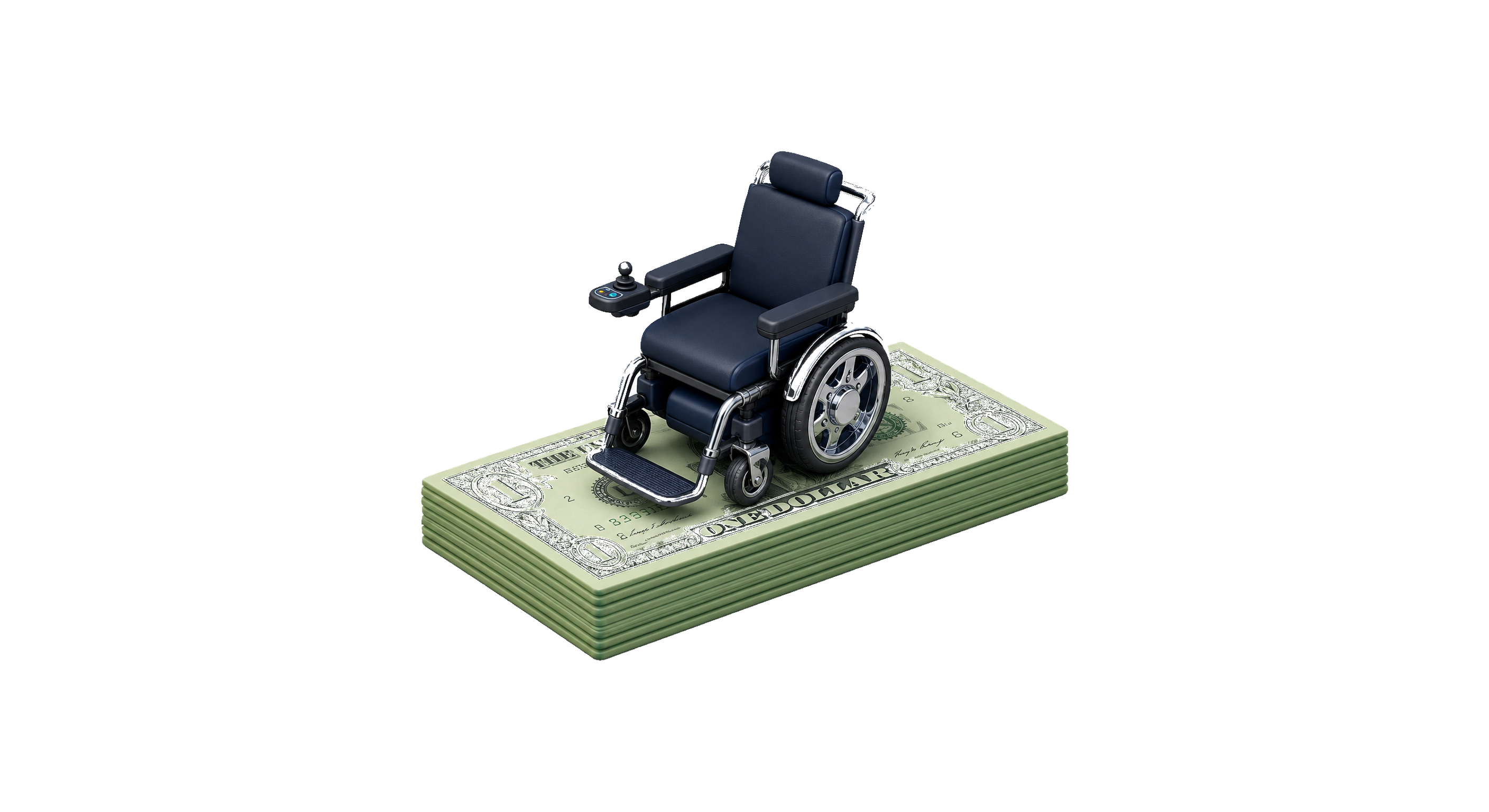
His family was devastated but they rallied, with his parents in nearby Vinings becoming his main caregivers and starting the process of making their home accessible. This is what a catastrophic injury does, it doesn’t just hit one person, it sends shockwaves through the entire family. The financial pressure started right away. Medical bills piled up for the surgeries, constant medications, physical and occupational therapy, and all the specialized equipment he now needed, like a power wheelchair and a modified car.
The Gig Economy Conundrum: Independent Contractor Status
Right away, the big legal problem was Michael’s status with DoorDash. Like most of these platforms, DoorDash classifies its drivers as independent contractors, not employees, and in Georgia law, that distinction is everything. “The classification of a worker as an independent contractor fundamentally alters their legal recourse in the event of an injury,” explains a seasoned personal injury attorney. “If Michael had been an employee, he would typically be eligible for workers’ compensation benefits, which cover medical expenses and a portion of lost wages without needing to prove fault.”
But as an independent contractor, Michael had no access to DoorDash’s workers’ comp. His only real path to getting compensation was a personal injury lawsuit against the at-fault driver, Sarah Jenkins, and then trying to get at whatever insurance policies DoorDash itself carried for its drivers. This is a common, and often financially ruinous, situation for gig workers all over Georgia. For more on how this impacts claims, see our article on Atlanta Gig Workers: 2026 Comp Gaps Exposed.
Understanding Life Care Costs for Paralysis
A spinal cord injury that results in paralysis is one of the most financially draining injuries a person can suffer. The term life care costs goes way beyond the first round of hospital bills. It includes all ongoing medical care, regular doctor visits, supplies like catheters, wound care, and the very real possibility of more surgeries down the road. Beyond that, you have the massive expenses for personal care help, home modifications like ramps and roll-in showers, accessible vehicles, adaptive tech, and vocational rehab to see if he could ever work again in some capacity.
You can’t go to court without a complete life care plan put together by certified planners. These plans map out every single future medical, therapeutic, and personal need, attaching a price tag to each one over the person’s entire expected lifespan. For a 32-year-old like Michael, these costs can easily reach millions. The National Spinal Cord Injury Statistical Center puts the average lifetime cost for a high paraplegia injury (like Michael’s) at over $2.5 million for someone injured at 25, and that doesn’t even count lost wages. The total bill is staggering.
Working through the Legal Field: Proving Negligence and Seeking Compensation
Michael’s legal team had one immediate job: prove it was her fault. The Smyrna Police Department’s accident report was the starting point, as it clearly stated that Sarah Jenkins broke Georgia traffic law by failing to yield. Witness statements backed this up, and the team got a subpoena for the traffic camera footage from the intersection. That video was the nail in the coffin, providing undeniable proof of her negligence.
The strategy was to file a personal injury suit against Jenkins, and her auto insurance was the first target. The problem? Georgia’s minimum liability coverage, spelled out in O.C.G.A. Section 33-7-11, is just $25,000 for bodily injury per person and $50,000 per accident. “These minimums are a joke for a catastrophic injury case like paralysis,” states a legal expert. “It’s a harsh reality that many drivers carry only the bare minimum, leaving victims of severe accidents severely undercompensated.”
This is where finding other insurance policies becomes absolutely critical. Michael had his own uninsured/underinsured motorist (UM/UIM) coverage, which is designed for exactly this situation. On top of that, DoorDash, despite the independent contractor classification, does carry a commercial liability policy for accidents during active deliveries. This policy is designed to kick in after the driver’s own insurance is tapped out. Digging through and accessing every possible policy, Michael’s, the other driver’s, and DoorDash’s commercial layer, is a grind that requires a lawyer who’s done it before. Understanding fault in Georgia left-turn accidents is key in these fights.
The Role of Expert Witnesses
To make the jury understand the true scale of Michael’s damages, his lawyers brought in a team of expert witnesses. You can’t just walk in and ask for millions. You have to prove it. An accident reconstructionist broke down the physics of the crash, cementing Jenkins’ fault. Michael’s own doctors, including his neurosurgeon and rehab physicians, testified about his injuries, his prognosis (or lack thereof), and the medical care he’d need for the rest of his life. A vocational rehabilitation specialist calculated his lost earning capacity, contrasting the career he was building with the new limitations from his paralysis. Finally, a certified life care planner presented the full plan, detailing the millions of dollars in costs Michael would incur over his lifetime.
These experts provided the hard data to put a number on Michael’s damages, not just past and future medical bills and lost income, but also the immense pain, suffering, and loss of enjoyment of life. The amount of complex evidence involved shows exactly why someone in this situation needs a dedicated legal team.
Negotiation and Resolution: A Long Battle
The legal fight in a catastrophic injury case is never fast. It’s a long slog of discovery, depositions, and tough negotiations. Predictably, Sarah Jenkins’ insurance company opened with a lowball settlement offer that was nowhere near Michael’s actual damages, it’s page one of their playbook. Michael’s lawyers, however, were fully prepared to take the case to a jury in Cobb County Superior Court if they couldn’t get a fair number. The mountain of evidence, especially the traffic cam footage and the detailed life care plan, put the defense in a tough spot.
After months of back-and-forth, they finally secured a multi-million dollar settlement. The money came from a combination of sources: Sarah Jenkins’ policy, Michael’s own UM/UIM coverage, and DoorDash’s commercial policy. While no check can give Michael his old life back, the settlement gave him the financial means to get the care he needs and live with some measure of dignity. It was a lifeline.
Lessons Learned from Michael’s Journey
Michael Chen’s story is a stark warning for anyone in a serious wreck, particularly if you’re working in the gig economy. First, having enough insurance is everything. Your own personal UM/UIM coverage is non-negotiable, and you have to know what (if any) commercial policies the gig platforms have. Second, if you’re in a bad accident, get medical help immediately and document every single thing. Finally, getting an experienced lawyer isn’t a luxury. It’s a necessity. Trying to handle Georgia’s personal injury laws, multiple insurance companies, and calculating future costs on your own is impossible.
The legal team that helped Michael got it, they understood that a Smyrna catastrophic injury had destroyed his entire existence, not just his body. They went to war to make sure he got the money he needed to build a new future after his DoorDash paralysis, giving him a fighting chance when he had none.
A catastrophic injury is a terrible thing to go through, but knowing your rights and getting the right help can make all the difference for your future.
What’s a catastrophic injury in Georgia?
In Georgia, a catastrophic injury is one that permanently stops you from working or causes a severe impairment, like paralysis, a traumatic brain injury, major burns, losing a limb, or serious organ damage. These are the kinds of injuries that always require extensive, lifelong medical care and rehabilitation.
Are DoorDash drivers covered by Georgia workers’ comp?
No. DoorDash drivers in Georgia are classified as independent contractors. That classification means they’re not eligible for traditional workers’ compensation benefits. Their main option for getting compensation after an on-the-job injury is to file a personal injury claim against the at-fault party’s insurance or go after any commercial policies the gig platform itself has.
What are “life care costs” in a personal injury claim?
Life care costs are all the projected expenses an injured person will face for the rest of their life because of a catastrophic injury. This isn’t just one bill. It’s a long list that includes future medical care, medications, therapy, adaptive equipment (like wheelchairs), home modifications, special transportation, and help with personal care.
How does Georgia’s minimum auto insurance affect a catastrophic injury claim?
Georgia law (O.C.G.A. Section 33-7-11) only requires drivers to carry $25,000 for bodily injury per person and $50,000 per accident. For catastrophic injuries like paralysis, where damages run into the millions, those minimums are completely inadequate. This forces victims to pursue claims against other policies, like their own uninsured/underinsured motorist (UM/UIM) coverage or a company’s commercial policy.
Why is a life care plan so important for a paralysis claim?
A life care plan is absolutely essential in a paralysis case because it’s a detailed, expert-created forecast of all future needs and what they’ll cost. Certified life care planners create these reports to put a real number on the long-term financial damage of the injury. It ensures the compensation you’re demanding in a lawsuit actually covers the true, lifelong cost of care and lost income.



