
There’s a ton of bad information out there about slip and fall Seattle cases, especially when an Uber Eats courier gets hurt and it’s a wet floor liability situation. A lot of what people assume about fault and money just isn’t true in a courtroom. Let’s talk about what really happens when a delivery person hits a slick spot on the job.
Key Takeaways
- Property owners have to keep their place safe for everyone who comes in, and that absolutely includes delivery couriers.
- To win a wet floor case, you have to show the owner knew (or should have known) the floor was wet and dangerous.
- Workers’ comp might cover some medical bills and lost pay for an injured Uber Eats courier, but a separate third-party claim against the property owner can recover a lot more.
- What’s in an Uber Eats courier’s independent contractor agreement really matters for their legal rights when they get hurt.
- For a slip and fall claim to have any chance, you have to get medical care and document the scene right away. Time is not on your side.
Myth 1: It’s Always the Courier’s Fault for Not Watching Where They’re Going
This one comes up all the time, and it’s just a common, unfair assumption. Of course, everyone has to watch out for themselves, but you can’t just blame the victim and ignore the property owner’s legal responsibilities. In Washington State, anyone who owns property, a business or a home, owes a duty of care to people on their premises. They must keep the property reasonably safe and warn people about dangers that aren’t immediately obvious. An Uber Eats courier is there to do a job, so they’re what the law calls an “invitee,” and they’re owed the highest duty of care. The old defense of “they should have seen it” doesn’t just make the owner’s liability disappear. Think about a crowded restaurant in Capitol Hill during the lunch rush. An employee mops the floor near the door but doesn’t put out a sign, leaving a slick spot. The Uber Eats driver is trying to navigate the crowd, confirm the order on their phone, and get out fast. They might not see that patch of water. The owner’s negligence is in creating that danger (or not fixing it), not in the courier being focused on their job. The real question is, was the hazard obvious? Or did the owner do what was reasonable to make it safe? If there’s no “wet floor” sign or the lighting is terrible, the responsibility shifts hard toward the owner.
Myth 2: If There’s a “Wet Floor” Sign, the Property Owner is Completely Off the Hook
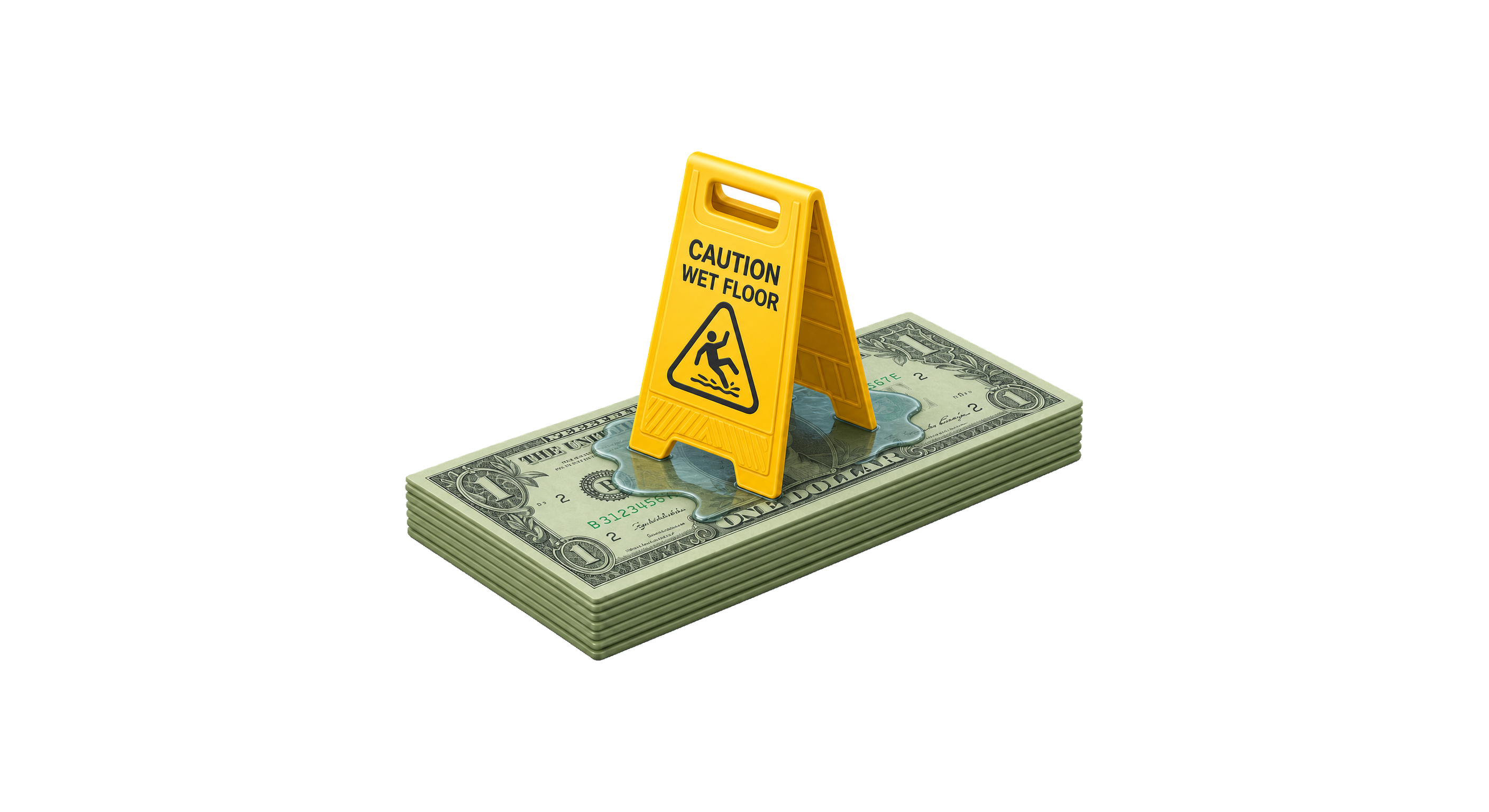
Not so fast. Dropping a “wet floor” sign is a good step, but it’s not a magical shield against a lawsuit. For a warning to be effective, it has to actually warn someone. Could anyone actually see the sign? Was it right next to the puddle, or was it off in a corner somewhere, hidden behind a plant? And how long was the floor wet before they even bothered to put the sign out? A sign that’s put out after someone’s already on the ground, or one that’s so small or faded you’d miss it, probably isn’t an “adequate” warning in the eyes of the law. Let’s say a freezer unit is leaking in a big grocery store down by Pike Place Market, creating a growing puddle. An hour goes by. An employee finally puts a tiny, beat-up “wet floor” sign ten feet away from the actual water, where it’s blocked by a sale display. An Uber Eats courier, hustling to get a pickup, doesn’t see the puddle and goes down. Even though a sign was technically “present,” you’ve got a strong argument that the store was negligent for letting the leak go for so long and then failing to post a clear, obvious warning. The warning has to be reasonable for the situation. Just having a sign isn’t the point. It has to actually work.
Injured in a slip & fall?
Know what your case is worth with AI Slip & Fall Payout Calculator for FREE!
Start my free evaluationMyth 3: Uber Eats Will Cover All Medical Bills and Lost Wages for Their Couriers
This is a huge misconception, and it comes from not understanding how gig companies work. Uber Eats couriers are almost always classified as independent contractors, not employees. That one word, contractor, changes everything. In Washington, workers’ comp is for employees. Independent contractors usually don’t get those benefits from the company they’re working for. But an injured courier still has options. While Uber Eats itself likely won’t give you traditional workers’ comp, they do have their own occupational accident insurance policies. This insurance is a completely different beast from workers’ comp, with its own limits and rules. For example, Uber’s “Partner Protection” policy might cover some medical bills and disability payments if you were hurt while actively on a delivery or online waiting for one. You have to read the fine print of that specific policy. On top of that, if your injury was someone else’s fault (like the property owner who didn’t clean up a spill), you can go after that third party with a personal injury claim for your medical bills, lost income, pain and suffering, and everything else. That’s when you need a slip and fall Seattle attorney who knows how to handle both the Uber insurance side and the third-party claim.
Myth 4: Proving Negligence for a Wet Floor is Almost Impossible
Proving negligence takes work and specific evidence, but it’s done all the time. The whole point of a wet floor liability claim is to show that the property owner either made the mess, knew about it and did nothing, or should have known about it if they were doing their job right. That last part is what lawyers call “constructive knowledge.” Let’s say a pipe bursts in the basement of a building in Sodo and water starts seeping up into a first-floor hallway. An Uber Eats courier slips and falls. If someone had called property management about a leak hours earlier, that’s “actual knowledge.” But what if the leak had been slow-dripping for days, leaving water stains and a musty smell that any routine inspection would have caught? That’s constructive knowledge, and they’re still on the hook. Evidence is everything here. You need photos or video of the wet floor and the lack of signs, and if you can get it, surveillance footage is gold because it can show exactly how long that hazard was there. You also need witness statements and the property’s own maintenance logs. If a restaurant’s policy is to mop every two hours, but the video shows a spill sat there for four hours before you fell, that’s a powerful piece of evidence. You can even bring in safety experts to testify about what a reasonable owner should have done.
Myth 5: You Have Plenty of Time to File a Claim After a Slip and Fall
Waiting is the worst thing you can do. It can absolutely kill your claim. Yes, in Washington State, the statute of limitations for personal injury is generally three years. Three years sounds like a long time, but your evidence can disappear in a matter of hours. The floor will dry. A sign will suddenly appear where there wasn’t one before. Security camera footage gets recorded over automatically, sometimes within 24 hours. Witnesses forget what they saw or move away. For an Uber Eats courier, you have to move fast. First, get medical help, even if you think you’re fine. Your medical records are the foundation of your claim. Second, document everything. Take pictures and videos on your phone of the floor, the area, and the lighting, show that there was no sign. Get names and numbers for anyone who saw what happened. Third, report the fall to the manager or owner on site and make sure they file an incident report (and get a copy). Then, call a personal injury lawyer with experience in slip and fall Seattle cases right away. A good lawyer will immediately start preserving evidence and handle the deadlines so you don’t make a mistake that costs you your case.
Myth 6: A Minor Injury Isn’t Worth Pursuing Legally
So many people try to tough it out after a fall, only to find out that “minor” ache is actually a chronic, painful condition. What feels like a simple bruise or a sprain can easily be a herniated disc, a small fracture, or even a concussion. Right after a fall, adrenaline is pumping, and you often don’t feel the real pain until the next morning. If you wait to see a doctor, you’re not only delaying your recovery, but you’re also making it harder to legally connect your injury back to that fall. And even for an injury that seems “minor,” the bills start piling up fast. Doctor visits, physical therapy, medication, and lost work time add up. For an Uber Eats courier, your income depends on being able to move, so even a few days off the road is a big financial hit. Filing a claim isn’t about getting a giant lottery win for a little bump. It’s about getting fair payment for your actual medical costs, your lost income, and your suffering so you aren’t stuck with the bill for someone else’s carelessness. These cases, especially a slip and fall Seattle claim for an Uber Eats courier dealing with wet floor liability, are complicated. The law is full of details about duty of care, negligence, and the weird employment status of gig workers. It pays to know how these things actually work.
What should an Uber Eats courier do immediately after a slip and fall on a wet floor?
First, get to a safe spot and see a doctor for any injuries, no matter how you feel. Then, use your phone to take pictures and videos of the wet floor, the area around it, and the lack of any warning signs. Get the names and phone numbers of anyone who saw it happen. Report the fall to the property manager and to Uber Eats, and make sure you get a copy of an official incident report. After that, you should call a personal injury attorney as soon as possible.
How does independent contractor status affect an Uber Eats courier’s slip and fall claim?
Because they’re independent contractors, Uber Eats drivers don’t usually get standard workers’ compensation from Uber. Uber might have its own occupational accident insurance that could cover some medical bills and lost pay. More importantly, being a contractor doesn’t stop you from filing a separate, third-party personal injury claim against the property owner whose negligence caused your fall. That’s where you can recover damages the other insurance doesn’t cover.
What evidence is important for proving wet floor liability in a slip and fall case?
The best evidence includes photos and videos of the spill and the area (especially showing no warning signs), security camera footage that shows how long the floor was wet, statements from any witnesses, and the business’s own maintenance logs. Your medical records that document your injuries from the fall are also absolutely necessary.
Can a property owner be liable if they didn’t know about the wet floor?
Yes. Even if they didn’t actually know about the wet spot, they can be held liable if they “should have known” about it. This is called constructive knowledge. If the puddle was there for so long that a reasonable owner doing routine inspections would have found it and cleaned it up, they can still be found negligent.
What kind of compensation can an injured Uber Eats courier seek in a slip and fall case?
An injured Uber Eats courier can demand payment for all past and future medical bills, all past and future lost income from being unable to work, and also for their physical pain and emotional suffering. The total amount depends on how bad the injuries are and how much they’ve affected your life and your ability to earn a living.



